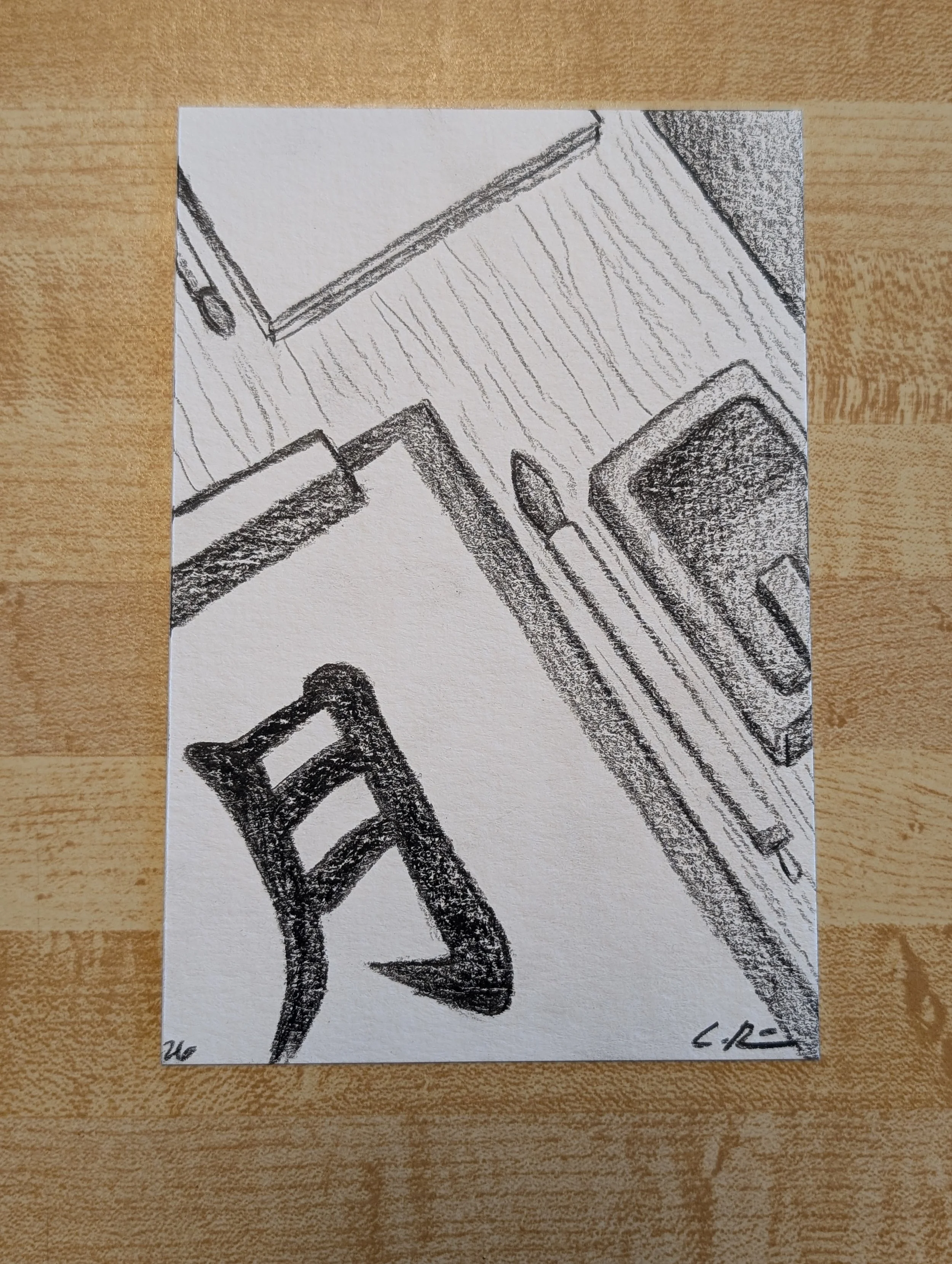
I dip my brush slowly into the rich black ink beside me, lightly dab off the excess liquid against the dark stone, then hover my hand in the air over the thin rice paper before me. Careful not to drip, I begin the first gesture - a long descending line that lifts slowly off the paper at the end.
ADVENTURE ART CLUB | DAY 28 | 9.28
JAPANESE CALLIGRAPHY WORKSHOP
WITH KEI NISHINO
MISSOULA, MONTANA
Tonight, you find me in the second Japanese calligraphy workshop that I’ve attended at Leaf and Quiet, both taught by Kei Nishino from Fukuoka, Japan. Kei has been practicing the Ancient art of calligraphy since she was 4 years old. Tonight, she offers her guests a hands-on introduction to the art form.
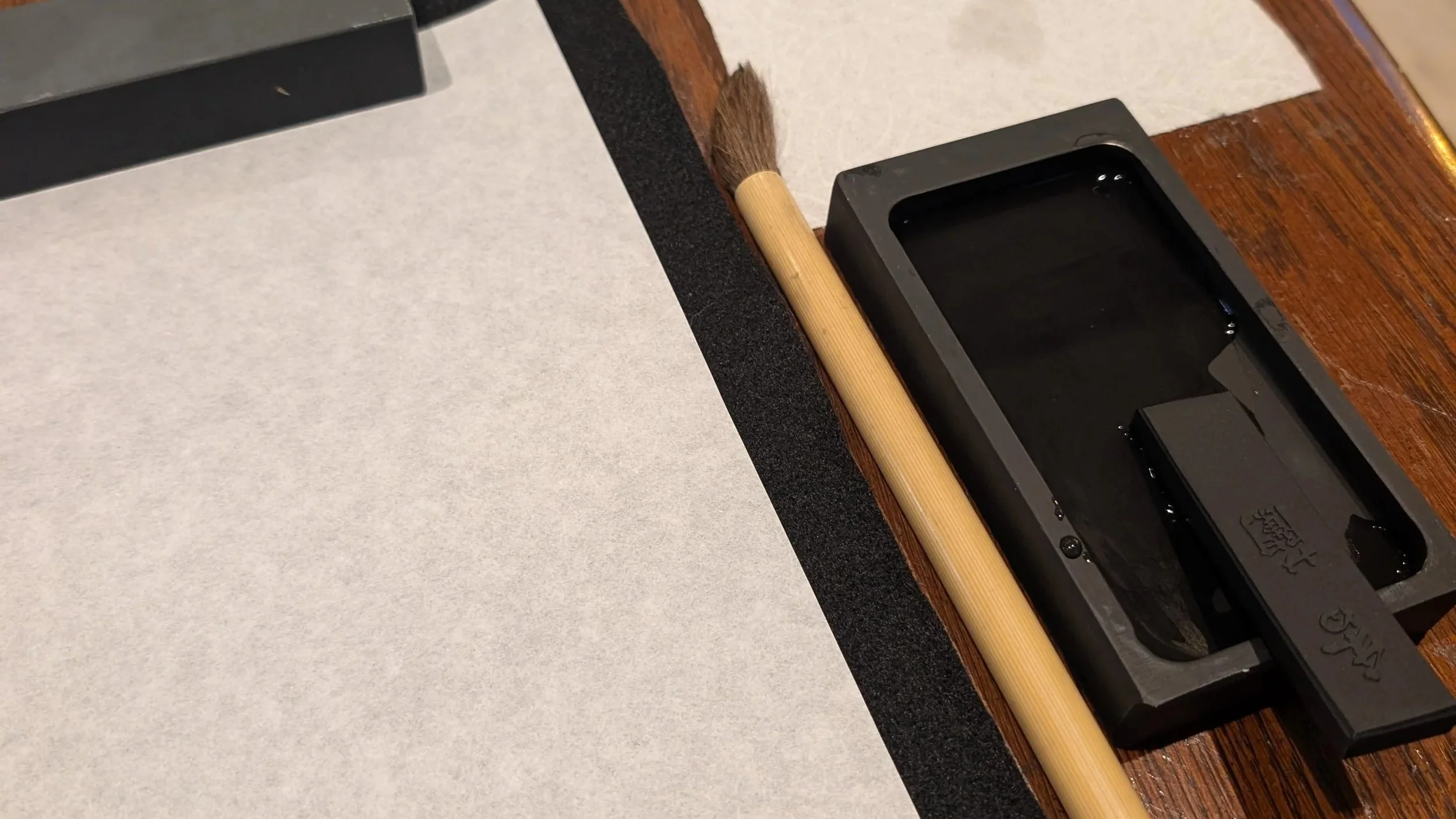
First we learn the names of our tools: fude - the brush, soot - the ink stick. We each have an inkstone and water, special paper, weights to hold it in place, and a felt mat beneath them. We begin the lesson by making ink.
Holding the soot ink stick in one hand, I trace slow concentric circles in the water on the stone. This grinding process takes some time, and I notice that the rhythmic preparation begins to quiet my mind. This pulls me into greater presence. My heart rate calms. I wonder…how can I bring a similar ritual into my other art practices? Perhaps readying my mind and heart is just as important as selecting tools before the start…
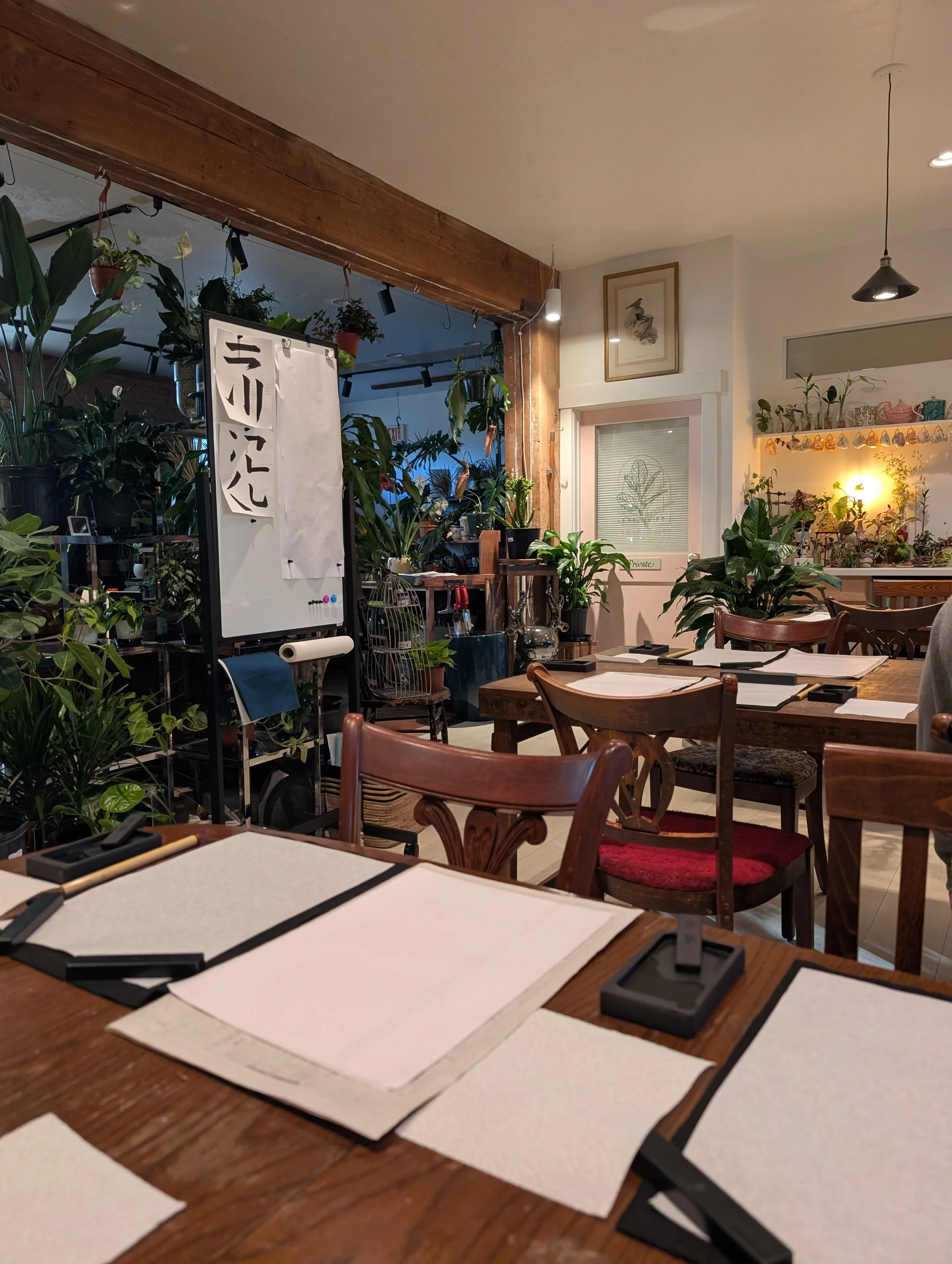
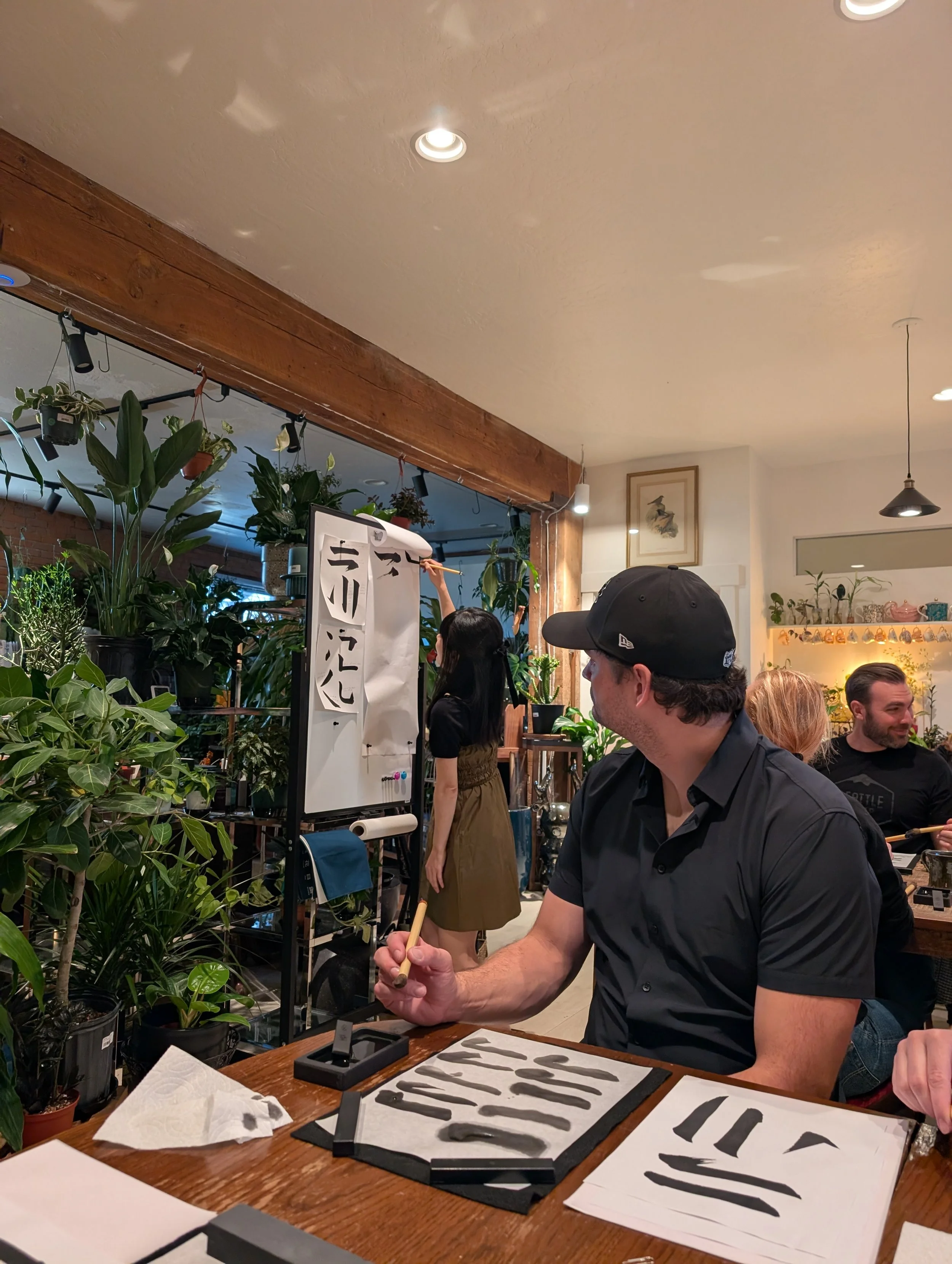
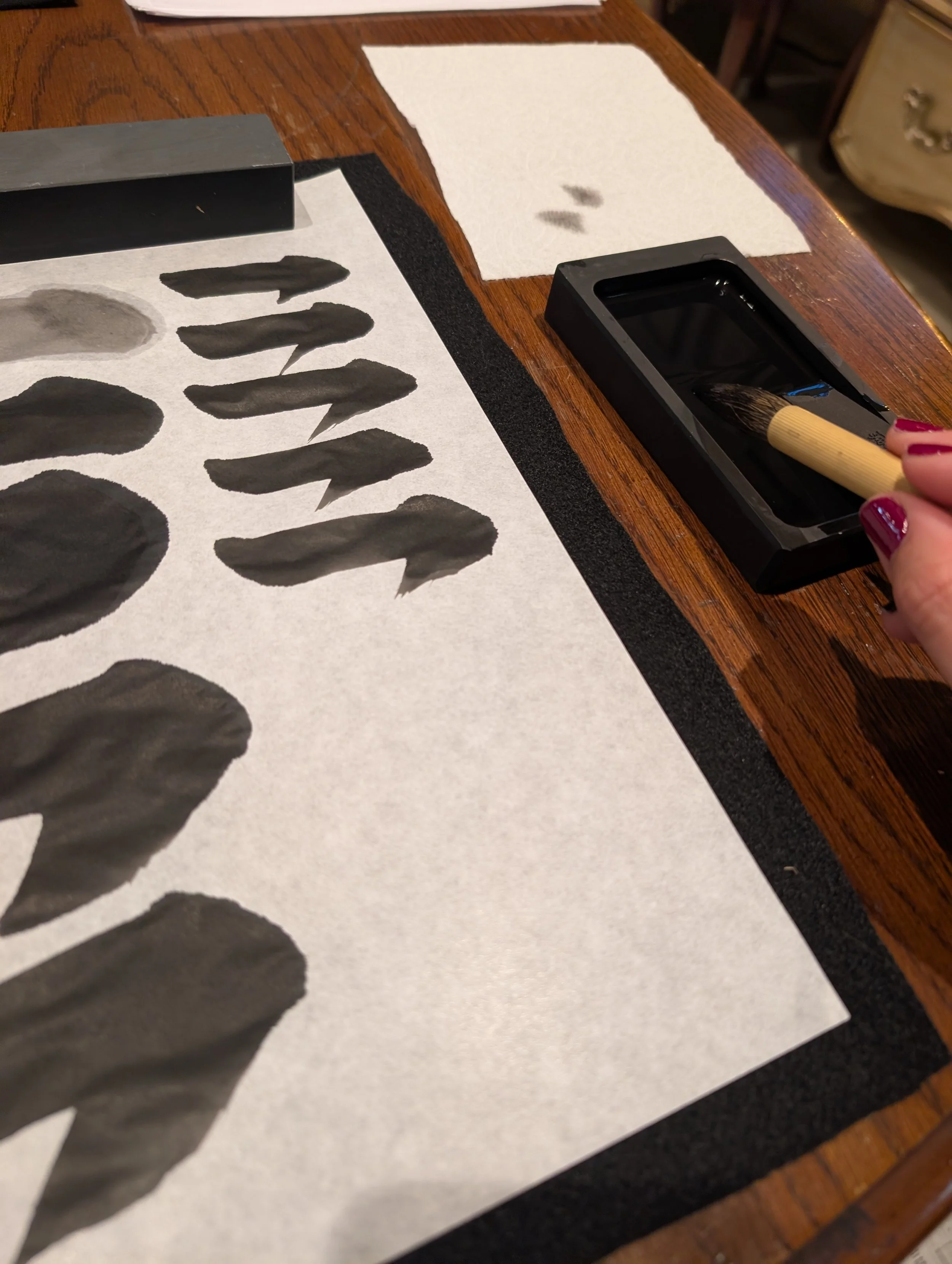
Once the ink is prepared, we move on to practicing the individual strokes that make up each character. Kei demonstrates the marks, and we spend some time practicing these, one by one. I notice how, as a true beginner in this practice, each of my marks appear different. Some are stiff and bold. Others flow. There is little consistency, which I know can only come through time and repetition. Today, however, I’m not seeking perfection. I’m merely seeking a certain kind of freedom that I found in the previous workshop.
At that first introduction to the medium, my loose strokes became a true reflection of the gesture of my hand’s movement. There was a lightness I could see in the mark making. Attention to the process and the feeling of making marks, with no attachment to outcome, led to characters with more personality and artfulness…lines that felt more like “me” in action. I surprised myself with how natural this felt in a practice I’d never experienced before.
Tonight, I’m feeling too tight and precious for my liking, which results in tentative gestures on the page. I’m over-thinking things. I’m too attached to the outcome. One out of every ten marks I make feels authentically “me” in this instance.
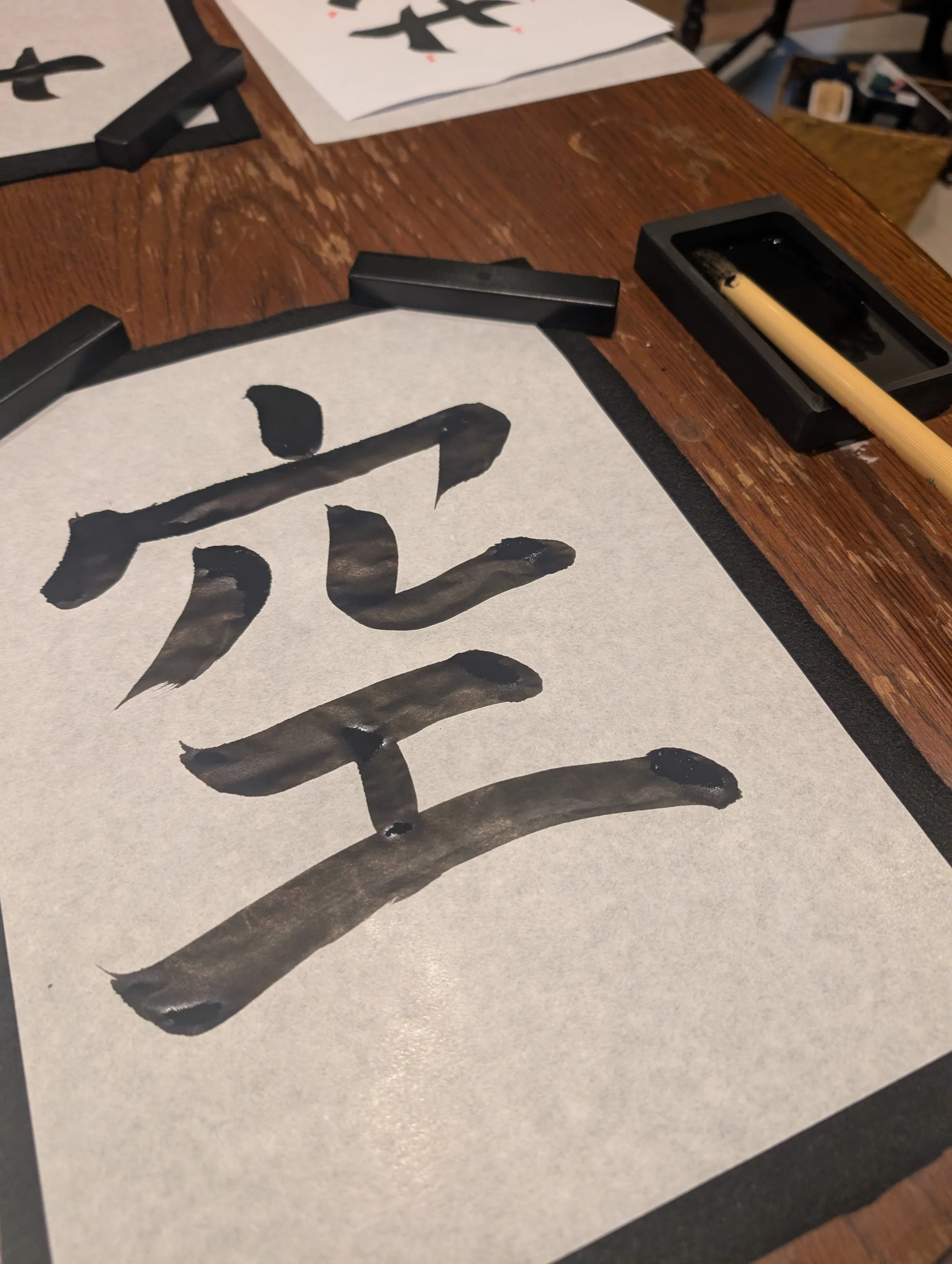
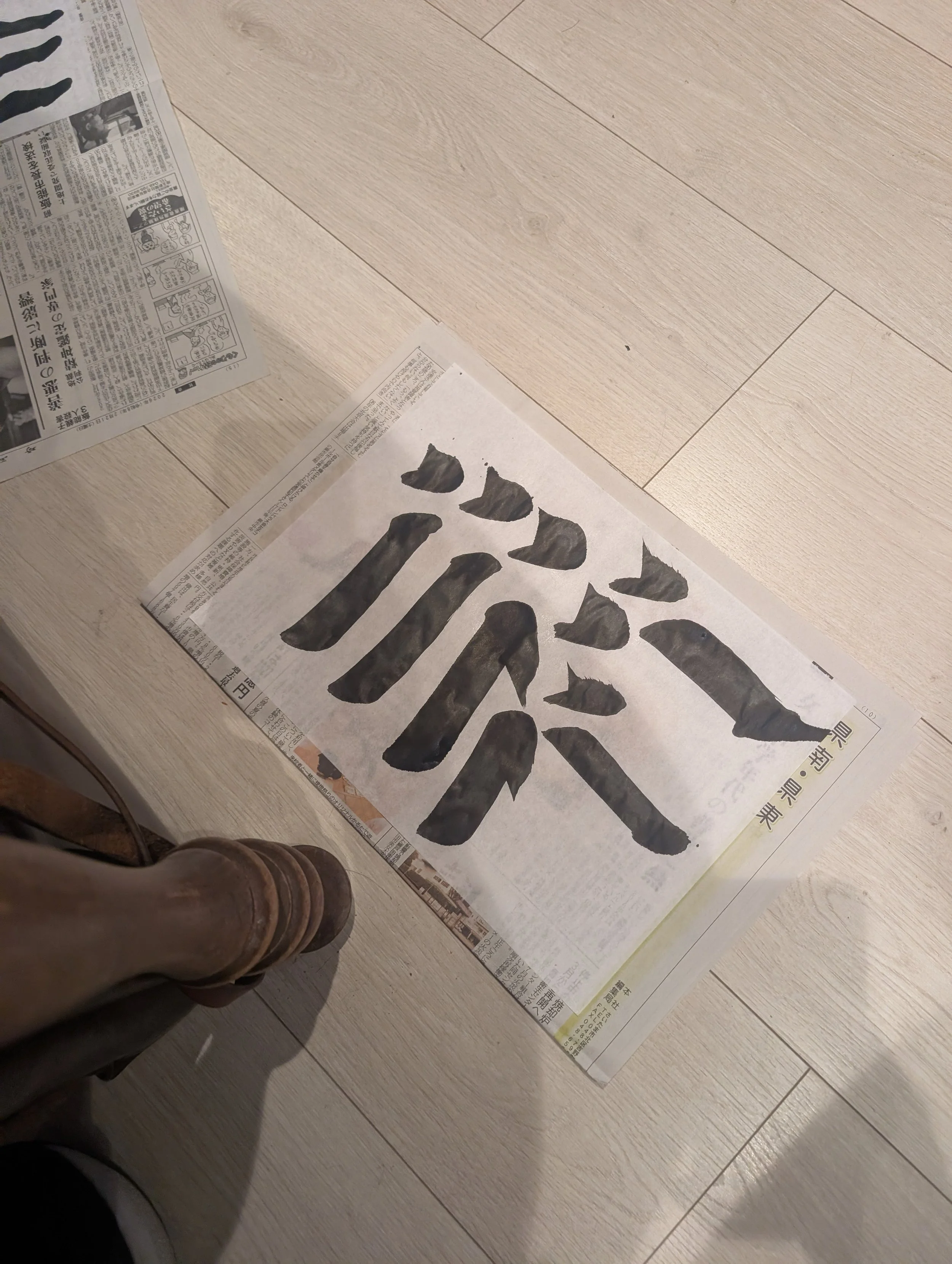
Finally, we choose a character to draw. In the last class, the Kanji character for “Sky” 空 spoke to me. Tonight, the “Moon” 月 beckons. This character for “Moon” is deceptively simple... Only four strokes bring the image to life, yet tonight I find myself struggling to let my marks flow effortlessly on the page. Over and over, I copy the strokes to make up the character, but I’m too in my head and not in my heart. I need more flow, more calm, to capture the moon’s nuance. I keep trying though and eventually create one character that I like enough to ask Kei to wrap up for me before we depart.
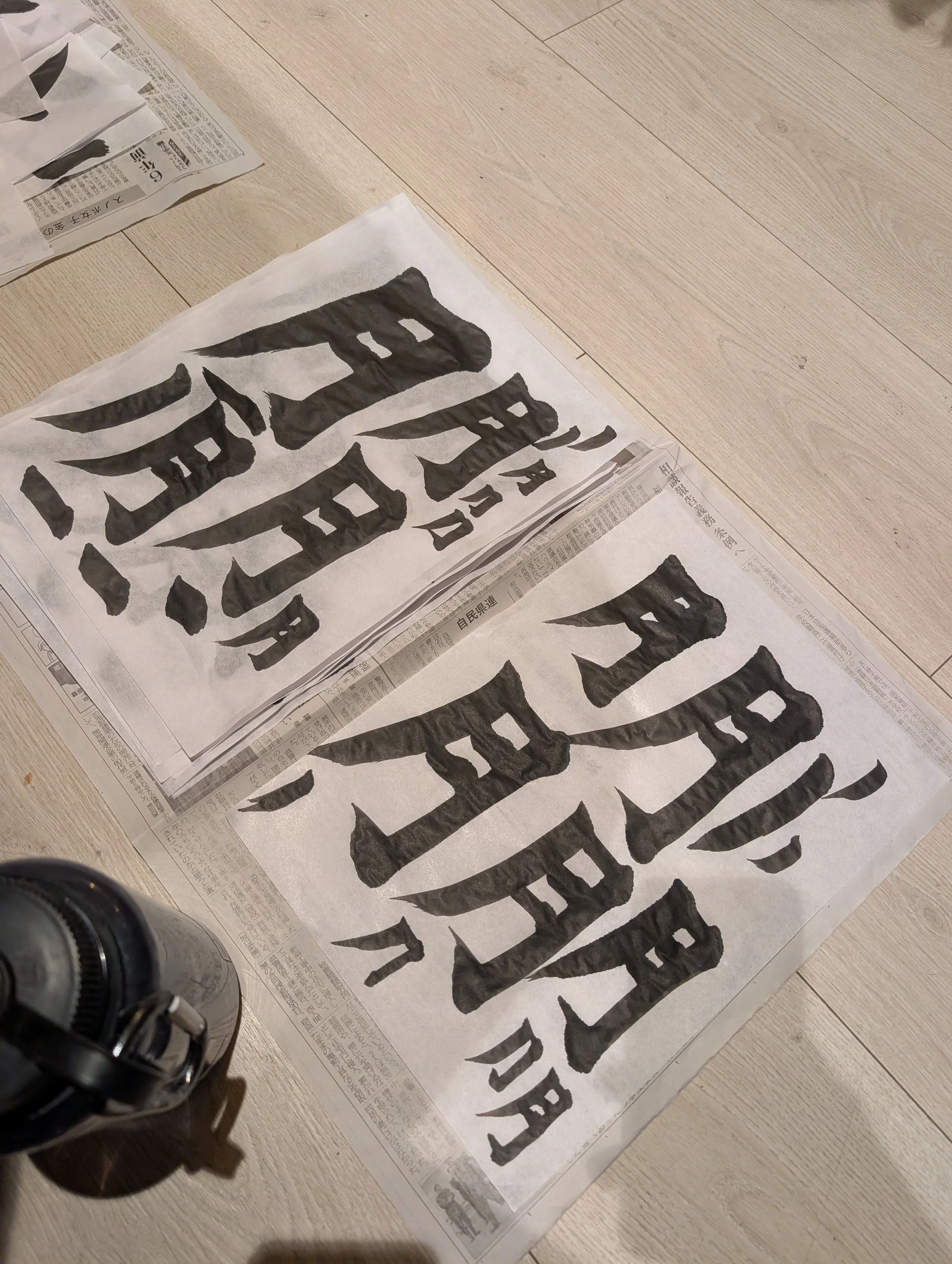
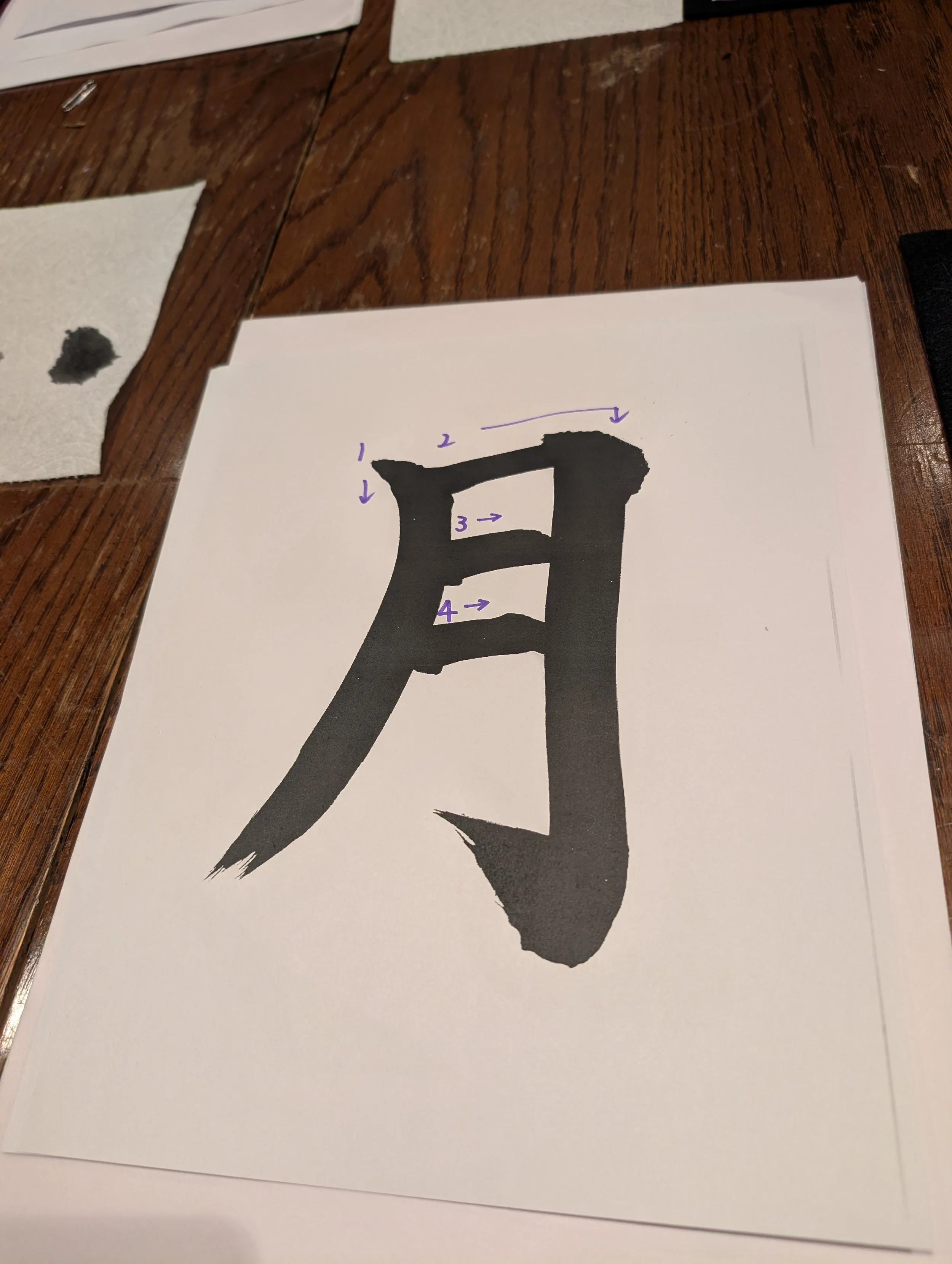
I’m finding that, while at first glance Japanese calligraphy may appear to be a simple act of writing, below the surface, this practice holds incredible depth, complexity, and nuance. Writing becomes ritual, with a beginning, middle, and end point, through which great care is taken.
Repetition builds on itself. Each stroke contains the effort of the one before it, standing alone and yet encompassing all. The lines are imbued with the Artist’s own character - their personality runs through the movement and each mark reflects an individual spirit. This appearance differs depending on the Artist’s mood at the time of creation. It differs from Artist to Artist. In this way, the creation is an extension of the creator, a simple byproduct of a meditative practice, and simultaneously deeply meaningful and heartbreakingly ephemeral. This rice paper can dissolve and wrinkle with the slightest touch of water, and yet we wrap it at the end with precious care, like an artifact to be treasured.
This practice has so much to teach me, and I want to see where it leads. As I step out into the night, I feel enlivened and grateful for the chance to learn just a little from Kei Nishino’s many years of study.
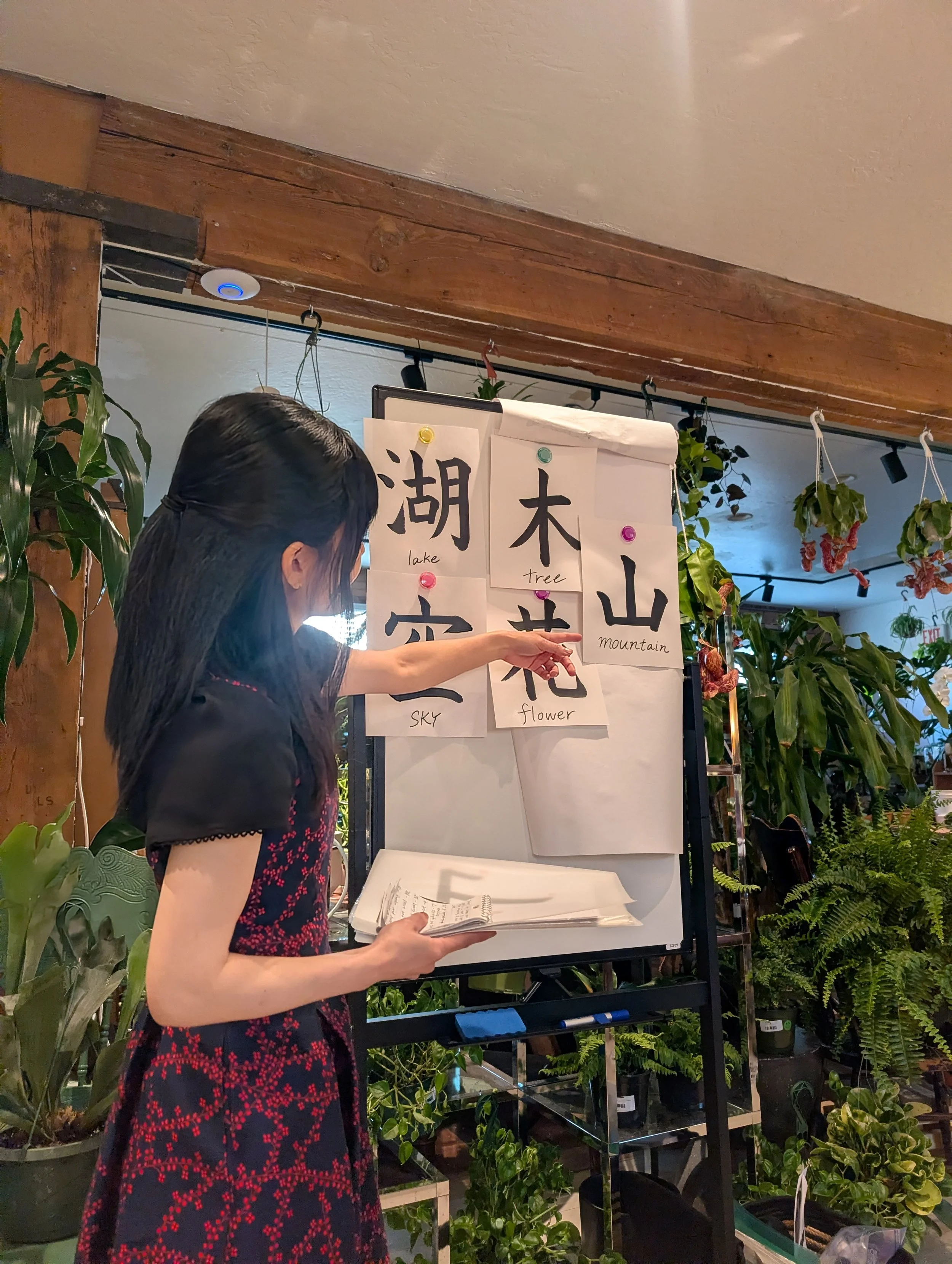
When we travel into other cultures through art, food, and music, we always broaden our horizons, discovering new facets of who we are. We fall in love with new ways of experiencing life’s wonder. We select mementos to bring home, and we try to incorporate what we’ve learned into our lives somehow.
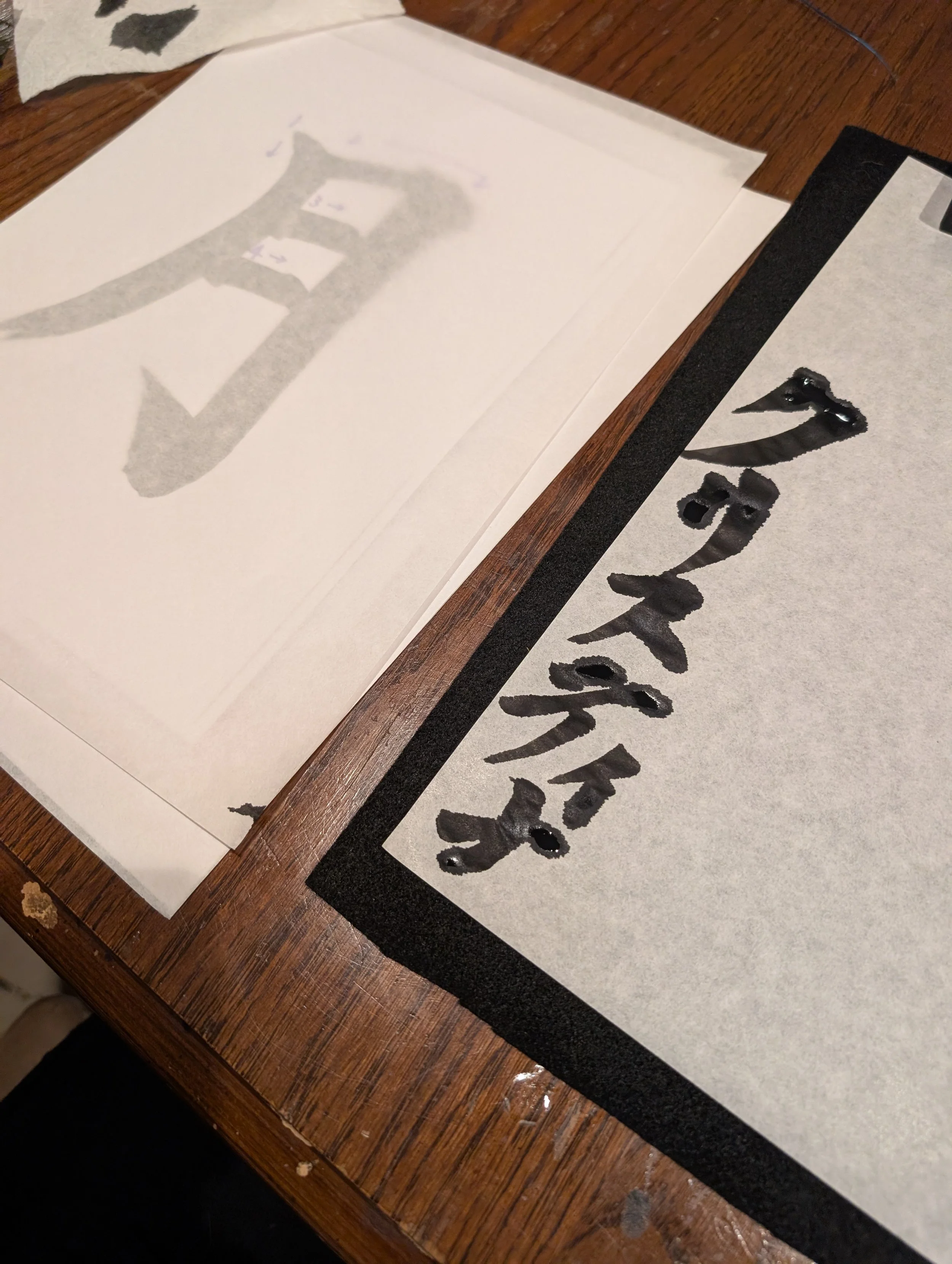
My Name in Katakana, Written by Kei Nishino
The beautiful ideal of America, which has been sold to so many weary adventurers (these tired, poor, huddled masses yearning to be free), is the great ideal of a melting pot wherein all these colorful experiences of the world can commingle together in one land. Here, you’re supposed to redefine yourself anew as some combination of all of this experience. If only we could live up to that dream… Without diversity of people, experiences like this workshop simply wouldn’t exist.
We make each other better when we share our cultures, when we listen and learn, when we try new things, when we treasure our uniqueness and find commonality in the same instance. Our culture becomes stronger and more beautiful through variety. How boring and small life would be without the adventure of diverse experiences…
Love & Gratitude,
Christina