ADVENTURE ART CLUB | DAY 2 | 9.2
MACLAY FLATS
CLARK FORK RIVER
MISSOULA, MT
Light streams in through the tall pines above me and onto the dusty trail I find myself strolling along, Scout, my dog, in tow. He’s excited to be out, having spent the day waiting for me to finally be ready to take him on another adventure. The rain from earlier in the afternoon has left the woods fragrant and full of dewy possibility. The smell of pine and cottonwood, soft earth, and wet greets me with infectious joy. I breathe deeper with every step, devouring the cold, sweet mountain air.
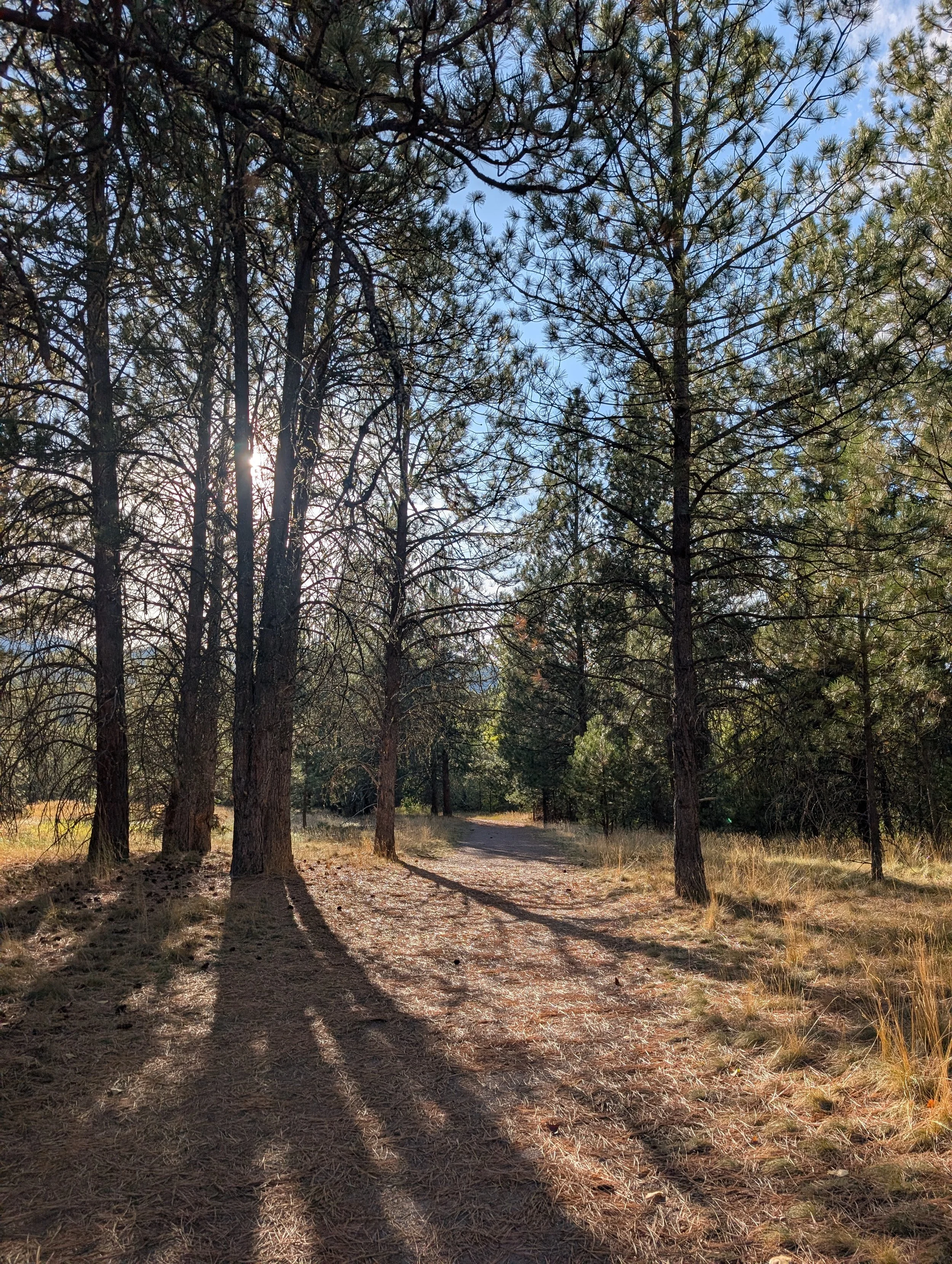
Green grasses sheltered beneath tangled trees cling to us from time to time as we traipse by, heading towards the river. I’m still hectic and scattered inside. Still rushing. Still only half here in my body. The peace of this place has not settled into my heart just yet, and I can hear voices - other people - here and there along the trail, more noisy than silent.
Always seeking solitude in places like these, I often resent other humans treading carelessly on the wild soundscape, and on my tender heart. I wonder what it is like to be a bird, disturbed and startled by invaders to their home... I remember I am one as well and try to get along.
After a short walk, I step out from the treeline to glimpse the water of the languid late Summer Clark Fork River for the first time on this visit. The fading golden light imbues the grasses of the hillside with warmth that contrasts the rich blues of reflected sky along the surface of the water. I walk along the rainbow rocky beach for a while, strolling back and forth beside the current. Of course, Scout bounds excitedly into the water without hesitation - gleeful and free. He’s found where he is meant to be. I often feel the same way in or near the water. Instant aliveness coupled with a depth of calm I find nowhere else. I feel like “me” here.
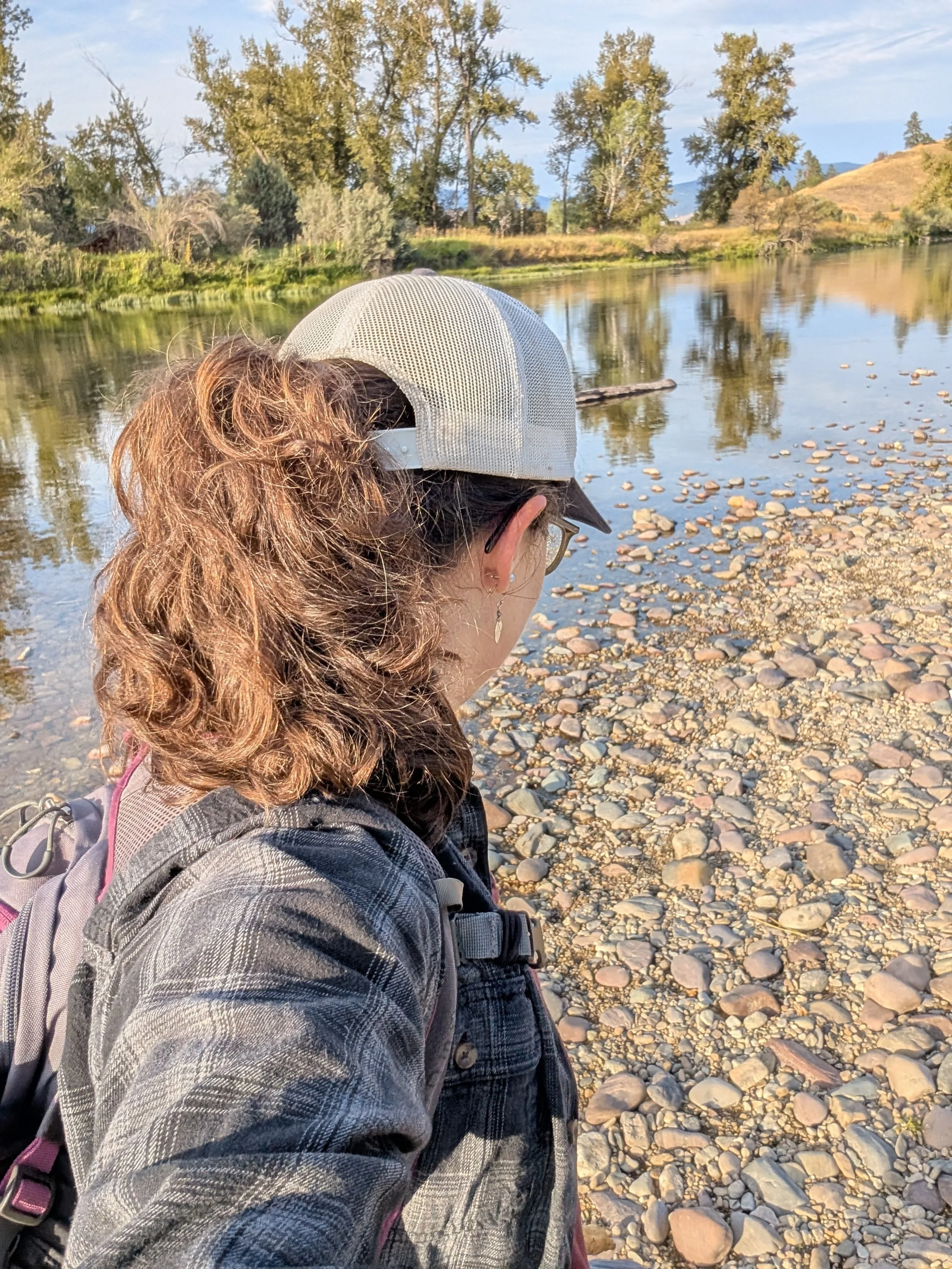
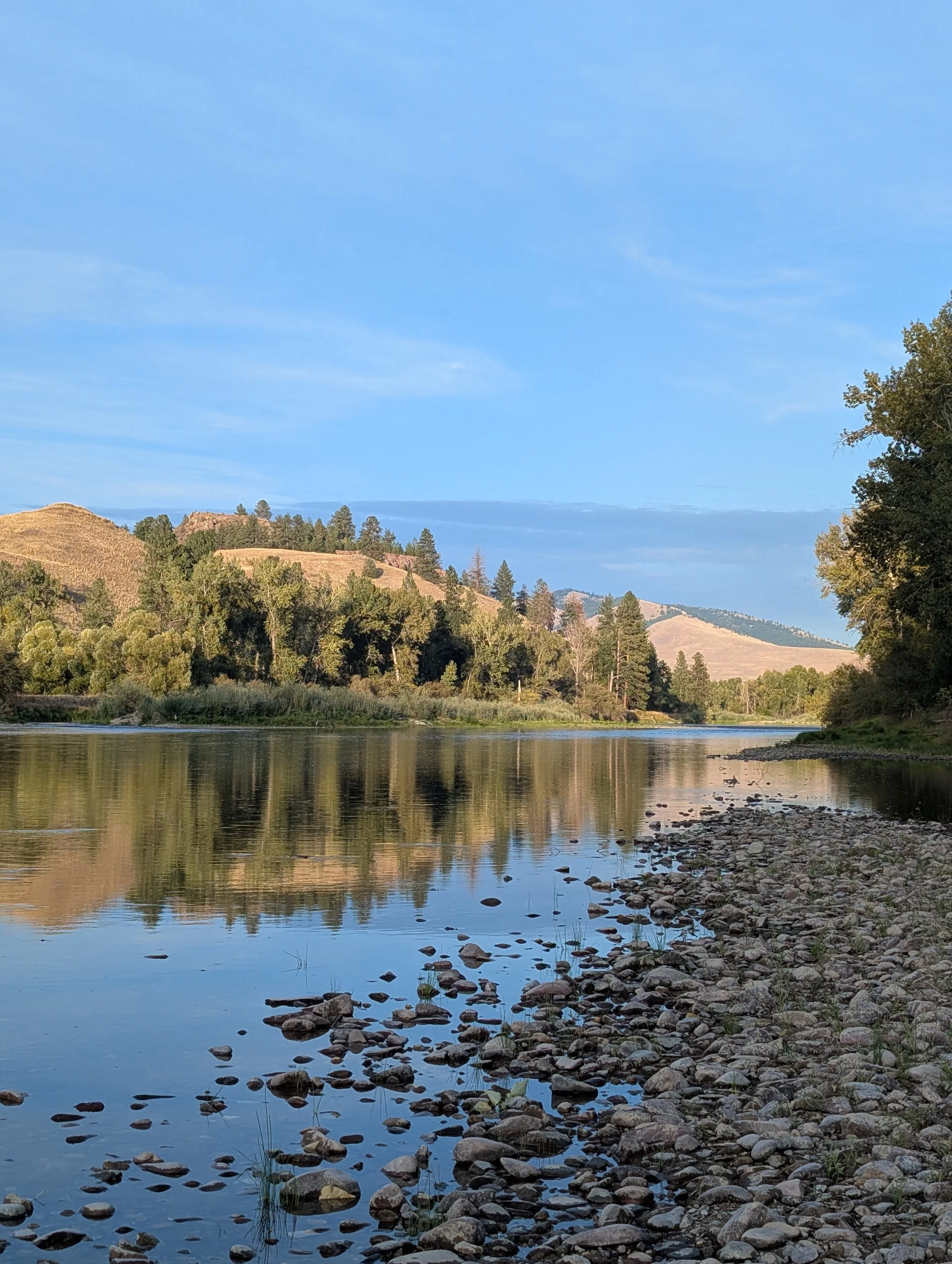
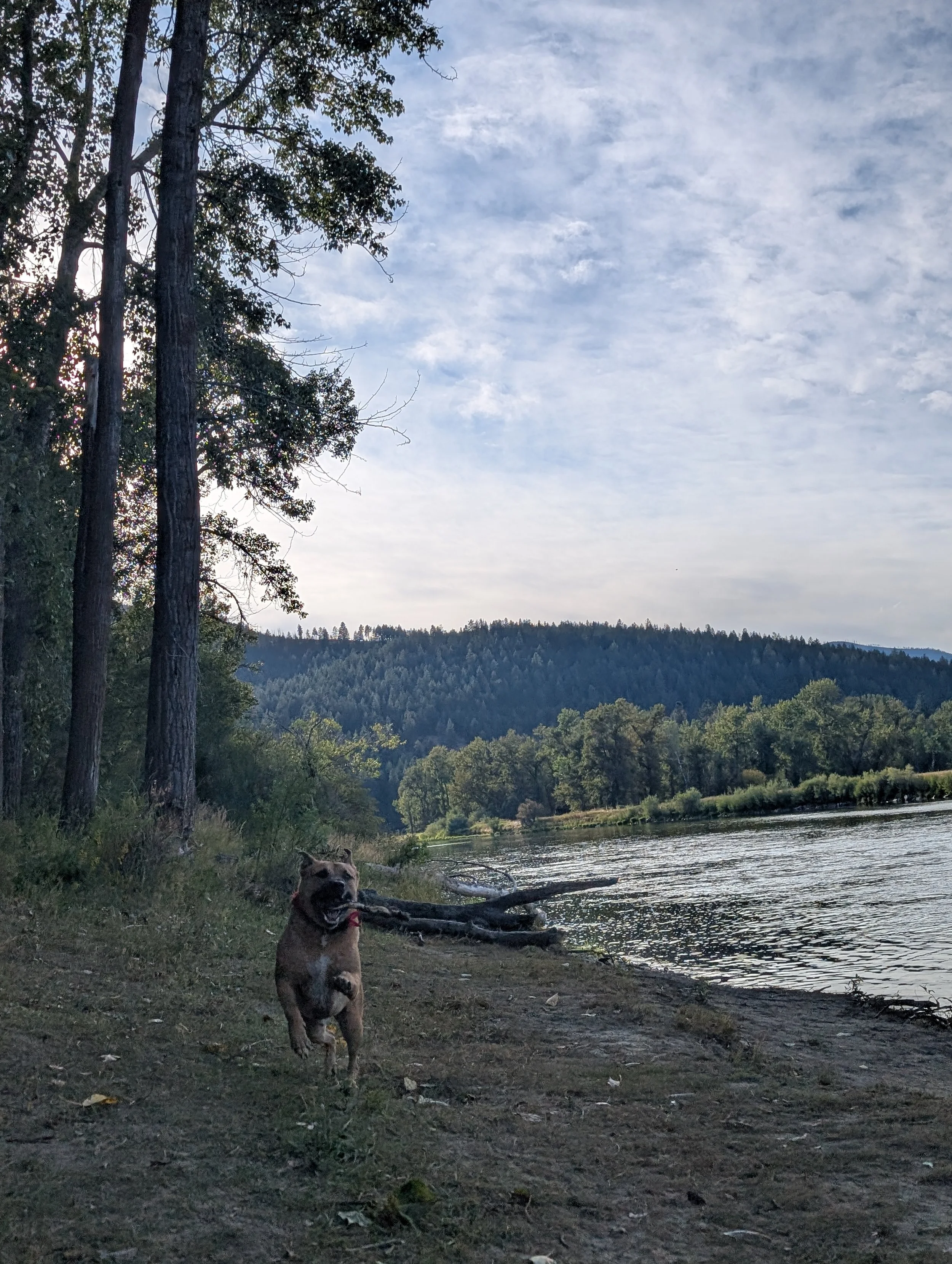
We traipse along the border of water and land for a short while, making our way under fallen trees that stretch out over the water or leaping over logs in the forest. I find a heron feather, bedraggled by the rain along the shore and debate bringing it home as a token. I take pictures instead. Eventually, we come across a wider sandy stretch of land leading to endless rocks closer to the river. In early Summer, this place lives fully underwater. Now, a forest of willows just beginning to yellow in the cool air of the Fall greets us, mysterious and graceful. We sway between them, moving to and fro, stepping softly. I loose my worries here and let them go, delighting in the delicate way the land sways with the air, reaching simultaneously towards the fire of the sun and the cool water deep below.
Eventually, I return to the water’s edge, Scout scampering behind me, to find an appalling sight before me. River rocks have been stacked into all-too-human shapes along the water’s edge. A circle here to form a pool. A jetty of a rock dam to give some person a dry place to stand. I’m angry.
On my adventures, I often find the signs of human presence: a corner of a candy wrapper left unnoticed, an empty beer can tossed into the forest, a lost sock from a child in a carrier, cigarette butts, endless utensils, sometimes even syringes. We don’t know how to co-exist with nature and leave our garbage everywhere, careless. It’s daunting, endless, and spoils the beauty around us.
Stacking rocks like this is a terrible activity to engage in because it disturbs local landscapes. In rivers, diverting the current’s flow can cause erosion, trap wildlife, and worse. So, I set about dismantling these “sculptures”. I wade into the water and start tossing rocks at random, breaking up the stacks beneath me. It takes ages, but when I leave, the water looks wilder. I’m happy with that difference and set my anger in the background.
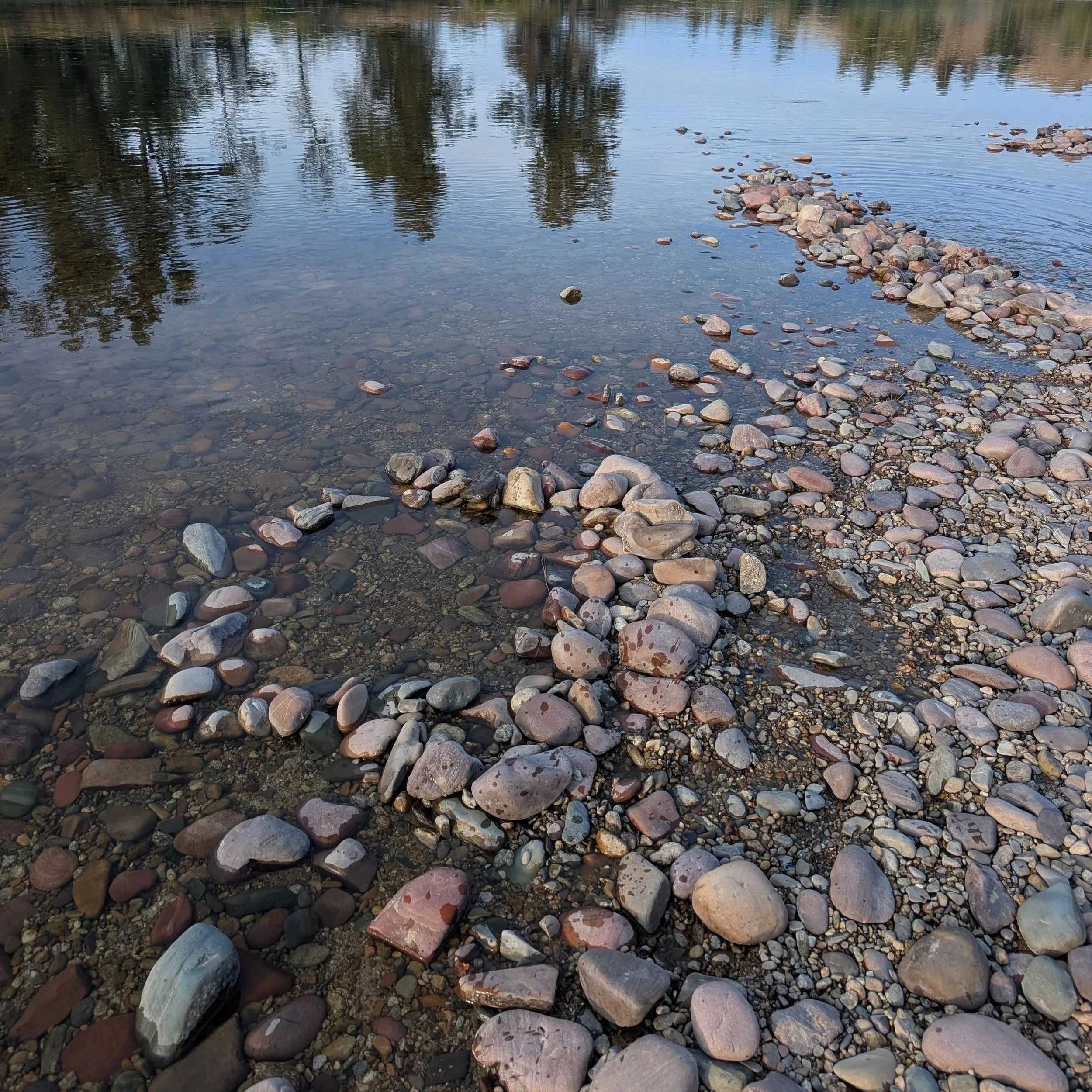
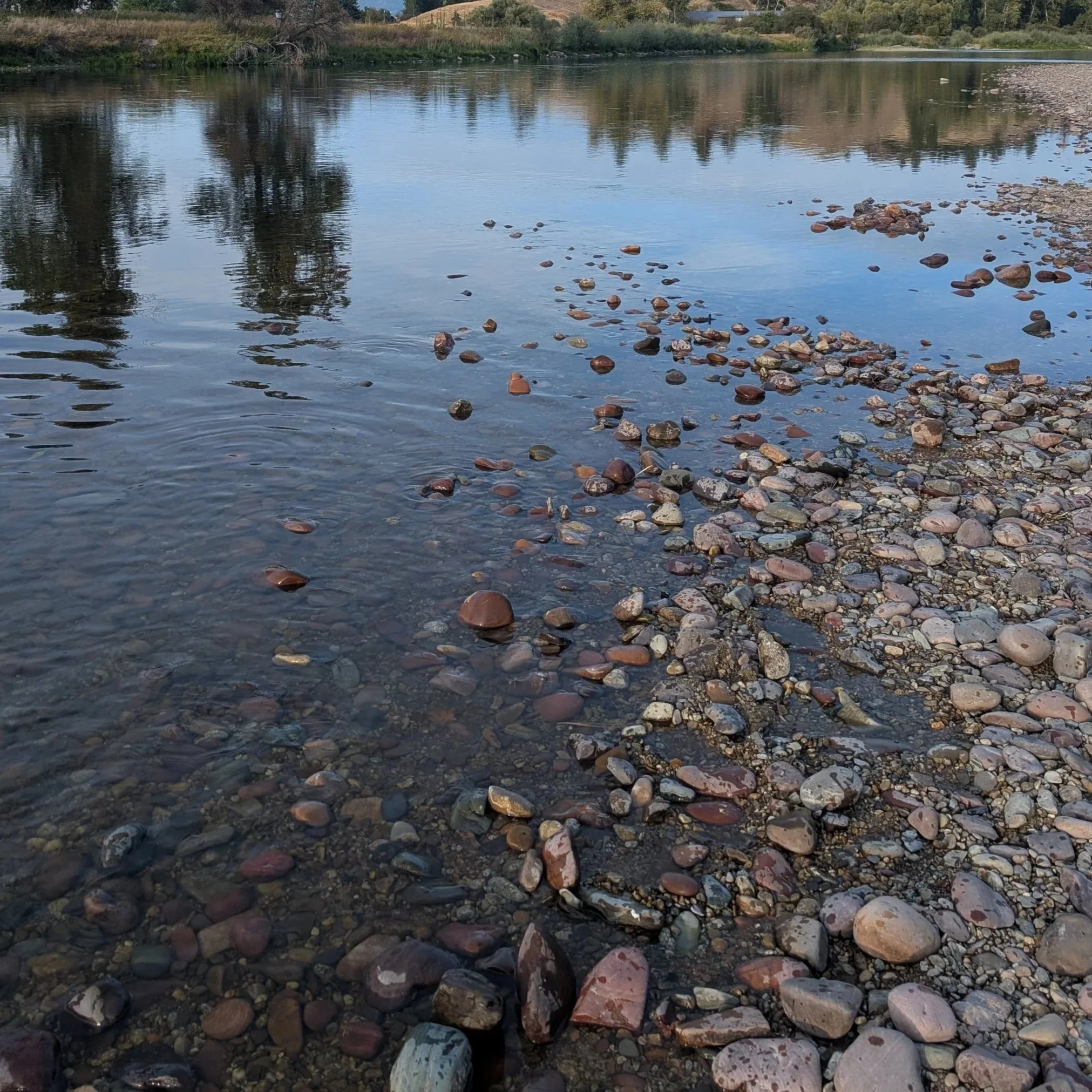
I travel on into the sunset, feasting on the blue and gold glassy surface of the water. I raise my binoculars to the willows on an island in the river and there I find a wise and stoic elder, surveying all around. Here is a great blue heron standing on the shoreline.
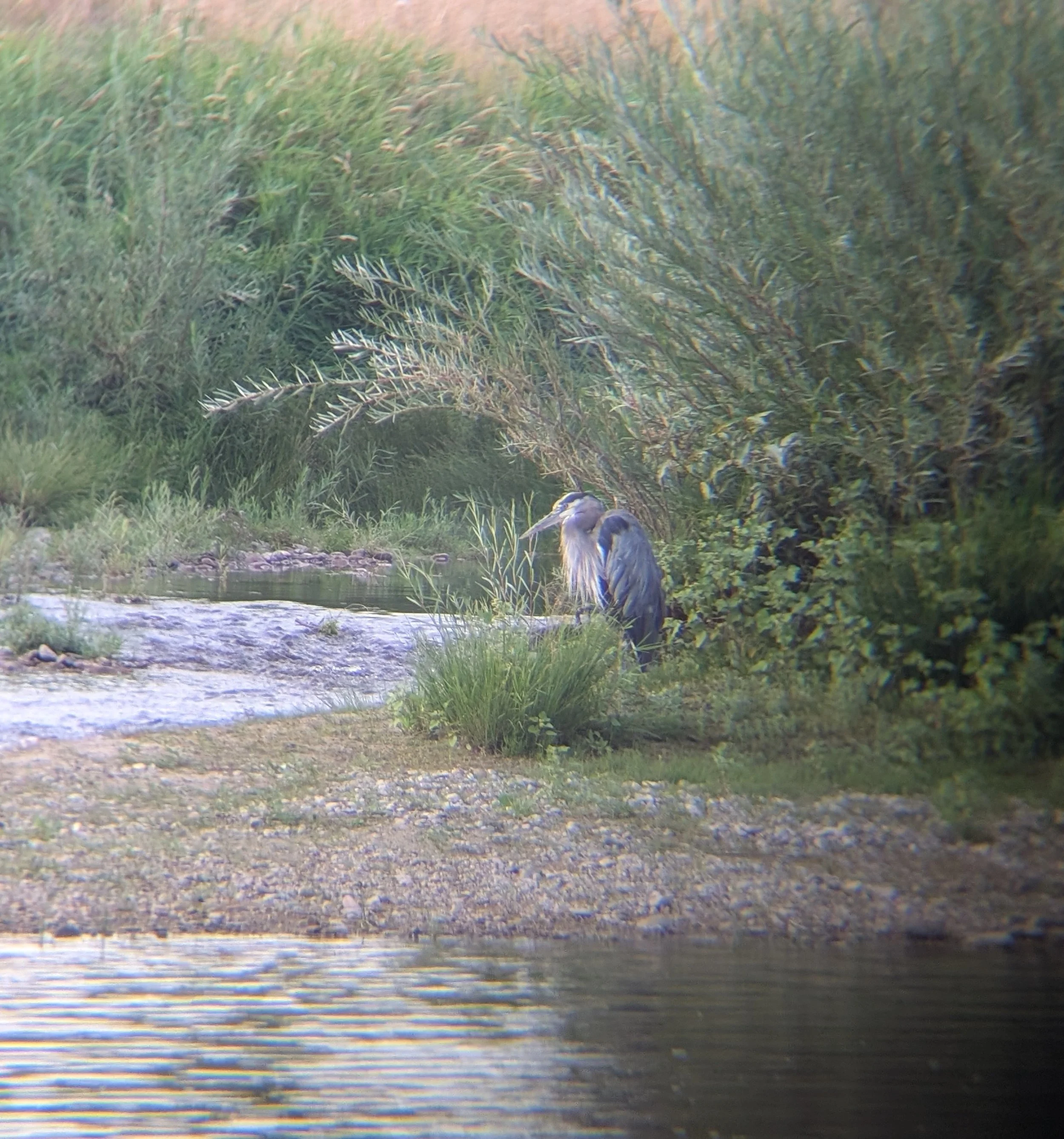
Dropping my pack, I pull out my sketchbook and draw what I see - a massive bird of blues and greys with wild feathers tickled by the breeze. It looks just like a wizened elder, wrapped in a cloak the color of a storm. It stands at the very edge of its domain, sheltered by a grove of willows, looking out at the entire world, observing, inscrutable. Light, land, and water lay at this heron’s feet, as do I, its subject. I’m struck by the sight of this magnificence.
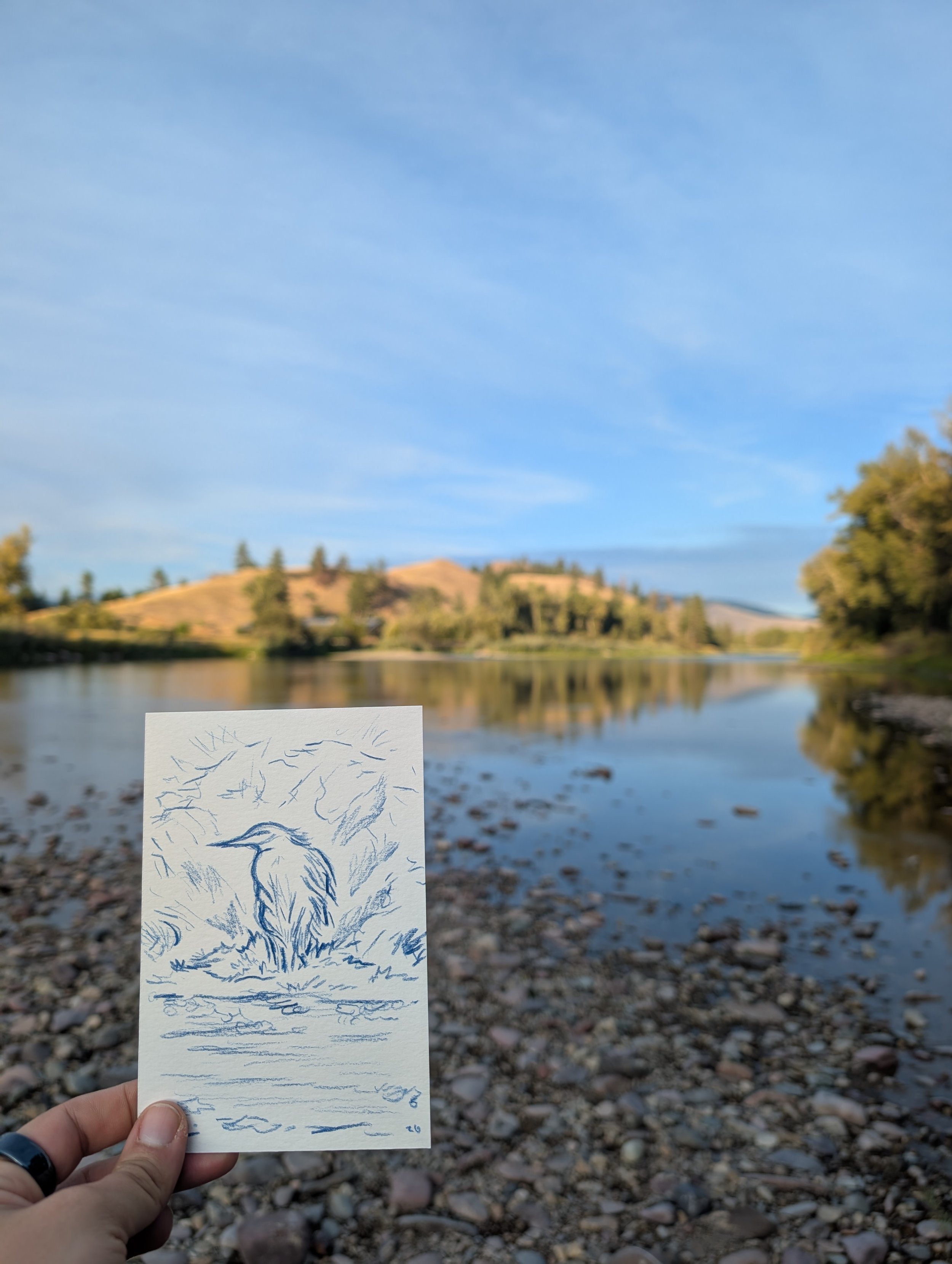
Why did I choose this exact trail at this time? Why did I meander by the water? Why did I choose to peer, just then, at that lighted land beyond? Why did this heron choose this place to rest after the rain? I relish this fortune of good timing and affirm my connection to the land and its wonder.
Later I learned that Wendell Berry, a favorite poet of mine, passed awayjust two days prior to this encounter. My favorite piece he wrote (treasured by many) is “The Peace of Wild Things”. This excerpt seems fitting for this scene: “When despair for the world grows in me, [...] I go and lie down where the wood drake rests in his beauty on the water and the great heron feeds. I come into the peace of wild things. ”
Lie down and rest a while. Even for a single breath. Here.
Turning to return the way we had come, I kneel my hand to the sandy ground and bow my head to this sight, whisper “Thank You”, and depart, grateful for the peace I’ve found here which has, once again, somehow cloaked me on my journey along the water. It soaks into my skin like the water I trailed my fingers through at the beginning of this adventure. I turn to leave - a different being than had arrived here.
This is the cure of wild places. They call us back to our selves, if we let them.
Love and Gratitude,
- Christina